CNC MILLING
WHAT IS CNC MILLING?
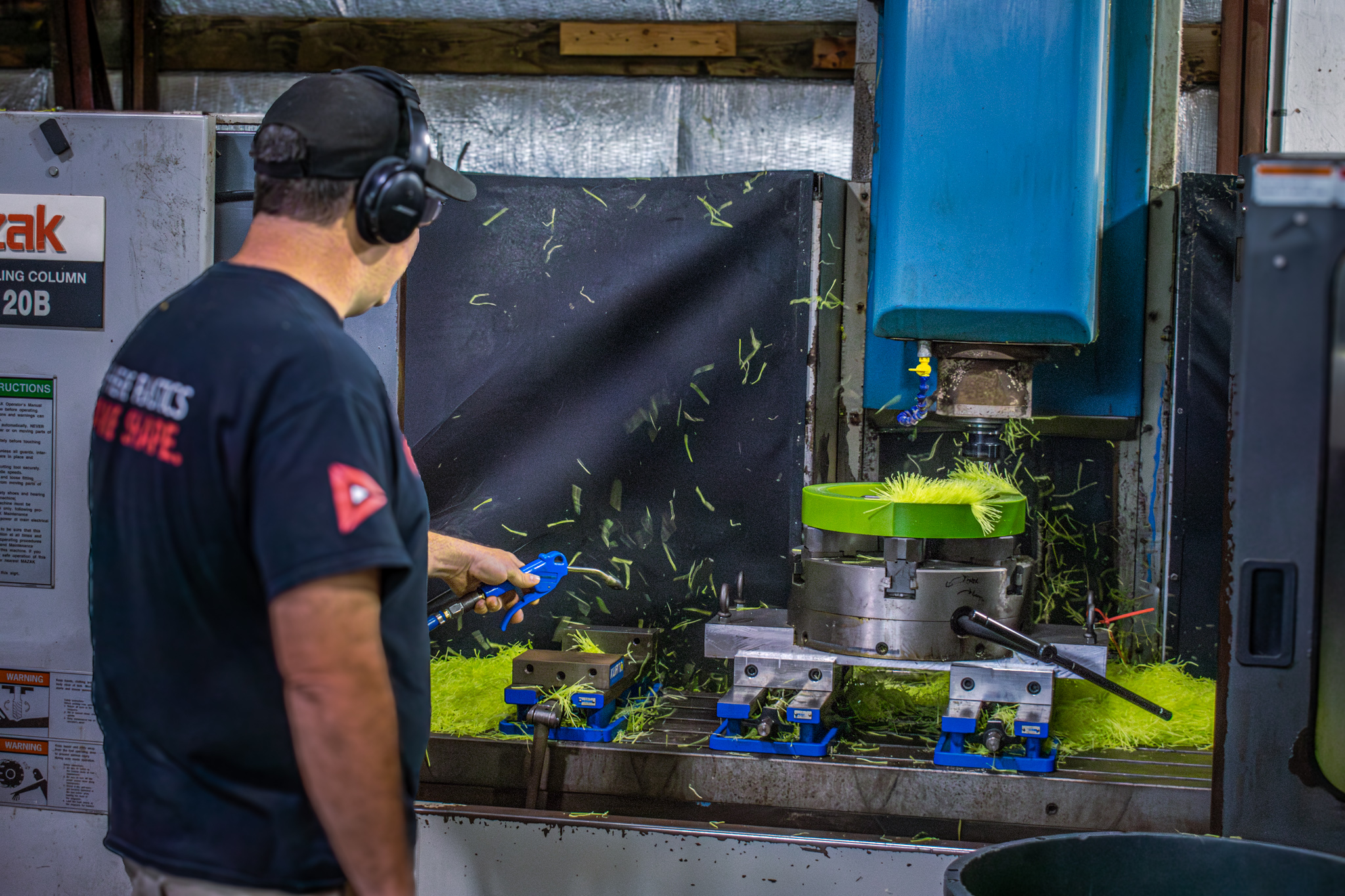
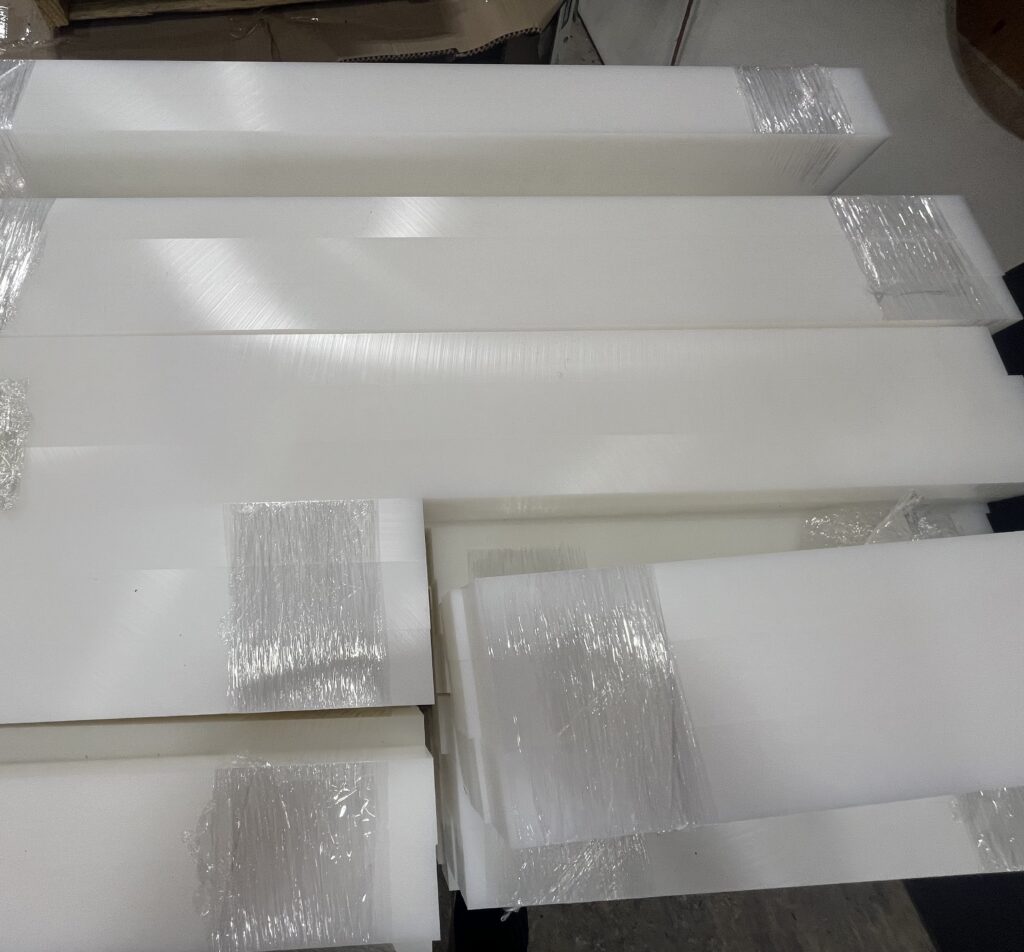
Milling is a plastic forming process in which a cylindrical cutter moves on an axis to carve the plastic material (that is locked into place) into a desired shape. CNC milling can chisel intricate designs, flatten surfaces, machine precise edges, or create recessed cavities such as pockets, slots, and drilled holes. Usually block or disc shaped plastic materials are used in milling.
There are two basic milling operations – up milling (also called conventional milling) and down milling (climb milling). Up milling is when the cutter and the plastic move in opposite directions; down milling is when they move in the same direction. Down milling is preferred for thinner and more precise parts as it results in a better surface finish, but up milling is more commonly used.
CNC MILLING vs. CNC LATHE TURNING
CNC Milling
- Cutter rotates on multiple axes. Plastic is static.
- Best for complicated 3D parts with multiple faces or that have flat or curved surfaces, such as brackets or housings.
CNC Lathe Turning
- Tool is mostly stationary (linear movement only). Plastic rotates.
- Best for symmetrical and round in cross section parts, like cylinders, shafts, spheres, and cones.
ADVANTAGES OF CNC MILLING
- No costly tooling required
- Single setup can have multiple cutting operations which reduces cost and time
- Tight tolerances
- Allows for complex shapes
- Smooth surface finishes
MATERIALS OFTEN USED IN CNC MILLING
- ABS
- Acetal (Delrin)
- Acrylic (PMMA)
- Nylon 6
- Polyether Ether Ketone (PEEK)
- Polycarbonate (PC)
- Polyethylene (PE)
- PTFE

CNC Milling Parts
Connect with Us
QC Plastics
1010 10th Street NE
Independence, IA 50644
Phone: 319-334-3344
Email: [email protected]